1.2 The concept of Baggage

Imagine that each of us carries an imaginary bag on our backs. This bag starts off empty when we are born, but as we go through life, it gradually fills up with experiences that shape who we are. Inside this bag, we carry our personal history, our hopes and expectations, our relationships, our fears and anxieties, our doubts and worries, and our past hurts and pains.
Everyone has their own unique bag, varying in size and shape. Some bags are heavy, burdened with negative experiences, while others are lighter, filled with more positive ones. It’s a balance of both positive and negative experiences. At times, the weight of negative baggage can be so strong that it holds us back and prevents us from reaching our full potential. These negative experiences can teach us valuable lessons and make us stronger as we grow, but they can also be damaging and hinder our personal growth.
Most of the time, we learn to carry our baggage and manage its impact on our lives. However, there are certain circumstances and situations where our baggage spills over, becoming a significant barrier to our success and well-being.
The key to managing our baggage lies in:
- Self-awareness: Understanding and recognizing how our past experiences affects us and becomes a form of baggage that we carry with us and how this baggage affects us either as students or educators.
- Identifying problems and triggers: Being able to pinpoint specific issues and situations that activate our baggage and cause emotional responses.
- Developing strategies: Having effective approaches to mitigate or remove the weight of our baggage, allowing us to move forward and thrive.
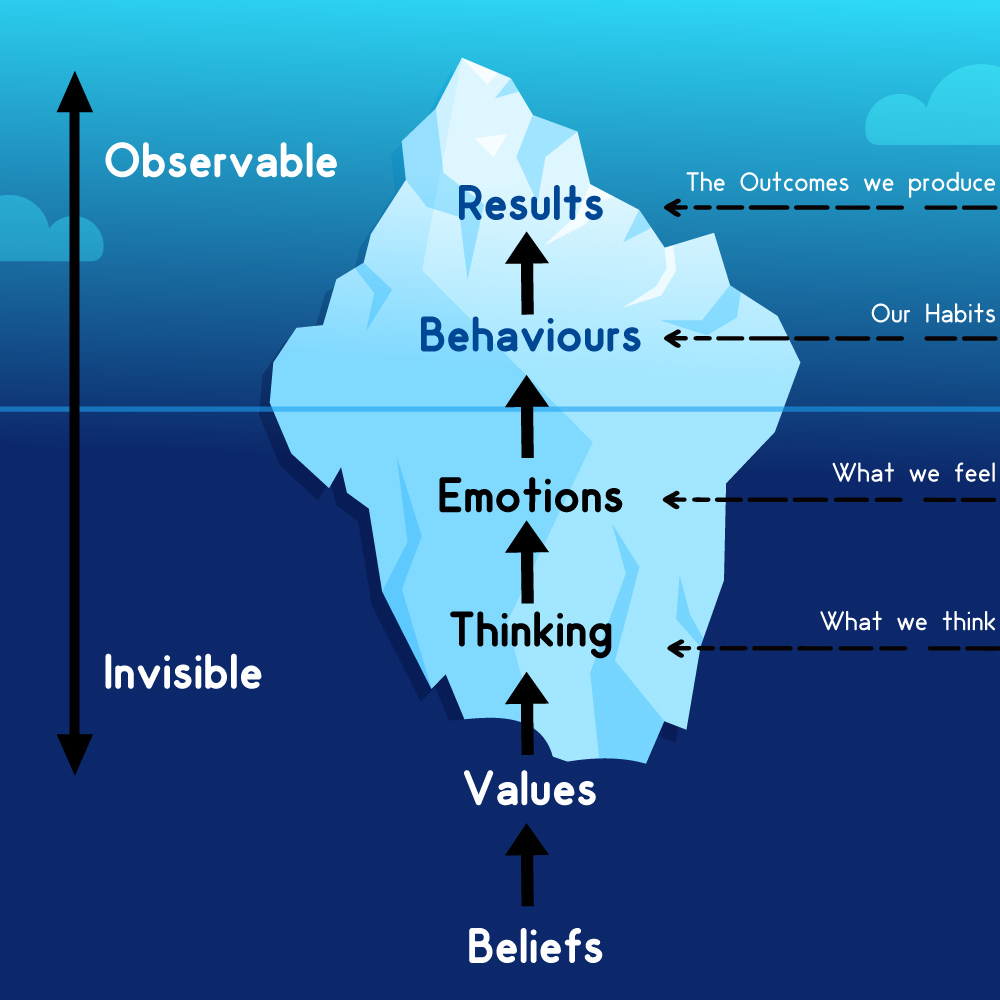
It’s important to remember that the behaviours we exhibit to the world may not always reflect the true emotions and feelings that we carry within. Our baggage is composed of many layers, and it’s essential to navigate and address them to lead a fulfilling life.
As educational staff it is important to keep in mind that some of the baggage we carry is visible but most of the baggage is invisible to others and sometimes even to the learner. What is usually visible are the results (the outcomes we produce) and the behaviours (our habits/ways of doing things). What is invisible are the emotions we feel and our thoughts. Our results, behaviours, emotions and thought are all affected by existing values and beliefs.